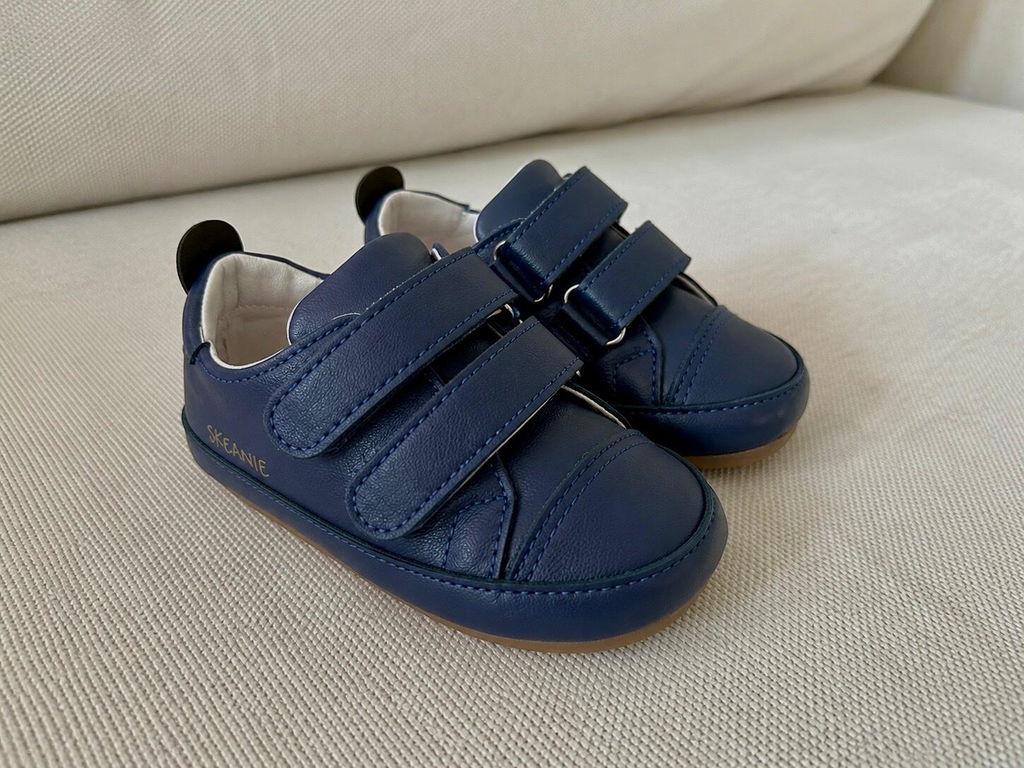
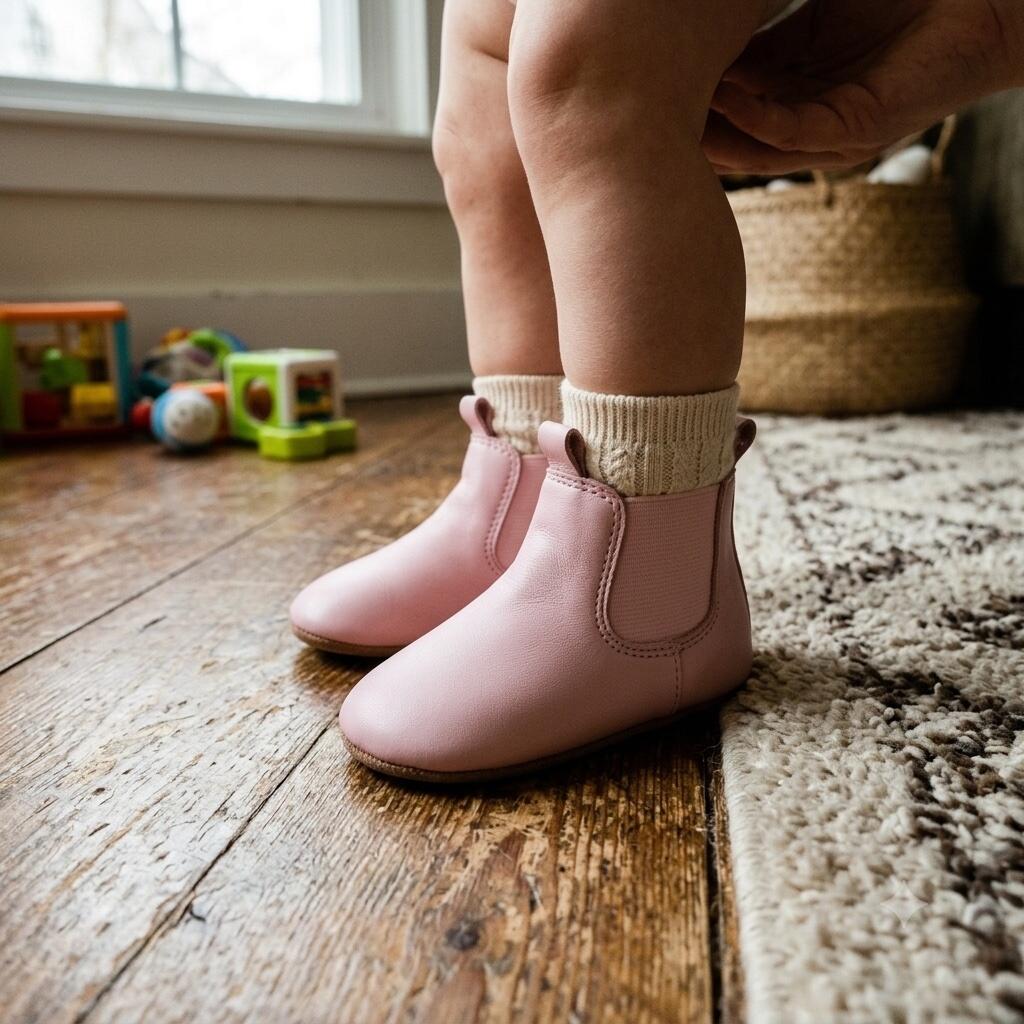
Your Childcare Centre May Already Have a Barefoot Policy
Here's something that might surprise you: the shoes you're packing in your toddler's bag each morning could be working against your childcare centre's own policies. A growing number of Australian early learning centres have adopted formal Barefoot Policies, and the shift is accelerating.
In March 2025, YMCA's Derrimut Early Learning Centre in Victoria published its own formal Barefoot Policy, documenting the developmental reasons behind the decision. This isn't an isolated case. The Aussie Childcare Network published implementation guidance in January 2025, signalling a sector-wide shift. With Australia's 2025 national child safety reforms in early childhood education and care prompting centres to review all physical environment policies (including footwear), this is a conversation every parent needs to be part of.
So what does this mean for the shoes you choose? Let's walk through it together.
What Australian Childcare Centres Are Actually Saying About Shoes
A formal Barefoot Policy means exactly what it sounds like: children are encouraged to go without shoes, or to wear barefoot-friendly footwear, throughout the day. It's not about being casual. It's a deliberate, evidence-informed approach to supporting your child's development.
YMCA Derrimut's policy states that barefoot play enhances sensory awareness, balance, and coordination while strengthening joints and muscles in infants and toddlers. The Aussie Childcare Network's 2025 guidance goes further, recommending sensory-rich barefoot activities and open communication with parents about the benefits.
This movement has institutional backing, too. ACECQA's National Quality Framework lends legitimacy to barefoot learning as part of quality early childhood education. This isn't just a parenting trend; it's a policy-level shift in how Australian educators think about children's physical environments.
Of course, the practical reality is that full barefoot isn't always possible. Outdoor excursions, cold mornings, and hygiene requirements all call for some form of footwear. That's precisely where barefoot-friendly shoes become the institutional default: the shoe that's required when shoes are required.
The Science Behind Why Structured Toddler Shoes May Be Doing More Harm Than Good
For years, parents have been told that toddlers need "supportive" shoes with rigid soles and structured uppers. The marketing language sounds reassuring: stability, arch support, ankle protection. But the emerging consensus from podiatrists and researchers tells a very different story.
A study published in Footwear Science found that over 75% of children were wearing poorly fitted shoes that caused problems for growing feet. That's a significant finding, and the consequences matter when you consider that children's foot bones (epiphyseal growth plates) don't fully ossify until ages 14 to 16 in females and 16 to 18 in males, according to a 2025 rapid scoping review published in PMC. Early childhood is, quite literally, the most critical window for footwear decisions.
The biomechanical evidence is equally compelling. Research by Wolf et al. (2008) showed that conventional shoes reduce foot torsion range of motion from 9.8 degrees (barefoot) to just 4.7 degrees, and reduce medial arch variation during push-off from 9.9% to 5.9%. In simple terms, structured shoes restrict the natural movement your child's foot needs to grow strong.
A multicenter study of 810 children (Hollander et al., 2017) confirmed that habitually shod children have reduced foot arches and higher hallux angles compared to habitually barefoot children. The Australian Podiatry Association is clear on this: allowing children to go barefoot or wear very soft shoes helps the foot to develop typically and assists in strengthening muscles.
Beyond Foot Shape: The Neurological Case for Barefoot-Friendly Footwear
Here's the part of the barefoot conversation that doesn't get enough attention: the benefits extend well beyond physical foot structure. We're talking about your child's brain development.
Each foot contains approximately 200,000 nerve endings in the sole alone, along with 26 bones, 33 joints, and over 100 muscles, tendons, and ligaments. All of these are stimulated by barefoot contact with surfaces, as reported by CareforKids.com.au.
This sensory input is the foundation of proprioception: your child's ability to sense where their body is in space. Barefoot sensory feedback stimulates natural growth of foot muscles and arches while enhancing neural pathway formation and brain development. Podiatrist Dr. Emily Splichal, writing for Naboso, recommends children remain barefoot until at least age four for healthy brain and body development.
This is why barefoot-friendly practices in childcare settings matter so much. When educators encourage barefoot or barefoot-friendly play, they're supporting cognitive and sensory development, not just foot shape.
The research backs this up. A 2022 study published in PLOS One (Hollander et al.) found statistically significant differences in medial foot loading between toddlers who habitually wore barefoot shoes versus conventional shoes after just seven months. That's a measurable impact in a remarkably short time.
When Barefoot Isn't Possible: What to Look for in a Barefoot-Friendly Shoe
We know that barefoot isn't always practical. Cold mornings, outdoor excursions, and hygiene requirements mean shoes will sometimes be part of your child's day. The question is: which shoes?
Paediatric podiatry increasingly points to the concept of a "respectful shoe": footwear that mimics the benefits of being barefoot while providing necessary protection. It's the practical middle ground that works beautifully in a childcare setting.
Here's what childcare educators and podiatrists recommend looking for:
-
Wide toe box to accommodate natural toe splay and chubby little toes
-
Thin, flexible sole that allows ground-feel and natural foot movement
-
Soft, breathable natural materials like genuine leather
-
Lightweight construction that doesn't weigh down small feet
-
Easy on/off design (childcare staff will thank you for this one)
Foot HQ Podiatry explicitly recommends barefoot-style shoes, noting they mimic walking barefoot and allow natural growth and strengthening of foot muscles. The American Podiatric Medical Association's (APMA) Seal of Acceptance is another credibility marker parents can look for when selecting footwear.
Consider this: children spend approximately 1,200 hours per year in their shoes during childcare and school years. Every feature choice matters.
What This Means for the Shoes You Pack in Your Child's Bag
If your centre has a barefoot policy, structured shoes with rigid soles and narrow toe boxes are working against the environment your educators have thoughtfully created. The good news? Choosing barefoot-friendly shoes isn't a compromise. It's the podiatry-aligned, educator-supported choice.
And you're not alone in making this shift. The global barefoot shoe market was valued at approximately AUD $830 to $845 million in 2024 and is projected to reach up to AUD $1.45 billion by 2034, according to Maximize Market Research. This reflects a mainstream change in how parents and professionals think about children's footwear.
Our suggestion? Ask your childcare centre directly about their footwear policy, then cross-reference that guidance with podiatry recommendations. You'll likely find they're saying the same thing.
At SKEANIE, we've always believed that the best shoe for a toddler at childcare is one that gets out of the way of their natural development: soft, flexible, wide, and kind to growing feet. That's been our guiding principle since 2005, and it's wonderful to see the rest of the sector catching up.
Sources