With over 292,000 babies born in Australia in 2024, there are a lot of new parents navigating the wonderful (and sometimes overwhelming) world of baby gear. One question that comes up surprisingly early is: "What shoes does my newborn need?"
As SKEANIE founder Natasha Barber discovered when she became a mum herself in 2005, the answer isn't always what you'd expect. Her search for shoes that actually supported healthy foot development, rather than just looking cute, led her to create SKEANIE. Two decades later, that same mission drives everything we make.
Here's the evidence-based checklist we wish every Australian parent had from day one.
Do Newborns Actually Need Shoes?
Here's the reassuring truth: newborns do not need structured shoes. Soft socks or booties to keep tiny toes warm are all that's required in those first precious months. According to the Australian Podiatry Association, shoes are only needed once a baby is confidently walking outdoors, and even then, barefoot walking indoors is preferred.
Why? A newborn's foot is almost entirely soft cartilage, not rigid bone. The final foot bone doesn't even begin forming until around age three. That soft, flexible structure needs freedom to move, flex, and feel the ground beneath it.
Barefoot time indoors is actively beneficial. It supports sensory development, strengthens the tiny muscles in the foot, and helps your baby build the neural pathways they'll need for balance and coordination later on. If you've been skipping shoes in those early months, you're not leaving a gap in your baby's care. You're doing exactly the right thing.
Understanding Your Baby's Foot Development Stage by Stage
Rather than choosing shoes based on age alone, it helps to think about your baby's developmental stage. Every child moves through these milestones at their own pace, and the right footwear changes with each one.
Newborn (0 to ~6 months)
Your baby's feet are cartilage-dominant and incredibly flexible. The only priorities here are warmth and freedom of movement. Soft booties or socks are perfect. No structure needed.
Pre-Crawler (~4 to 7 months)
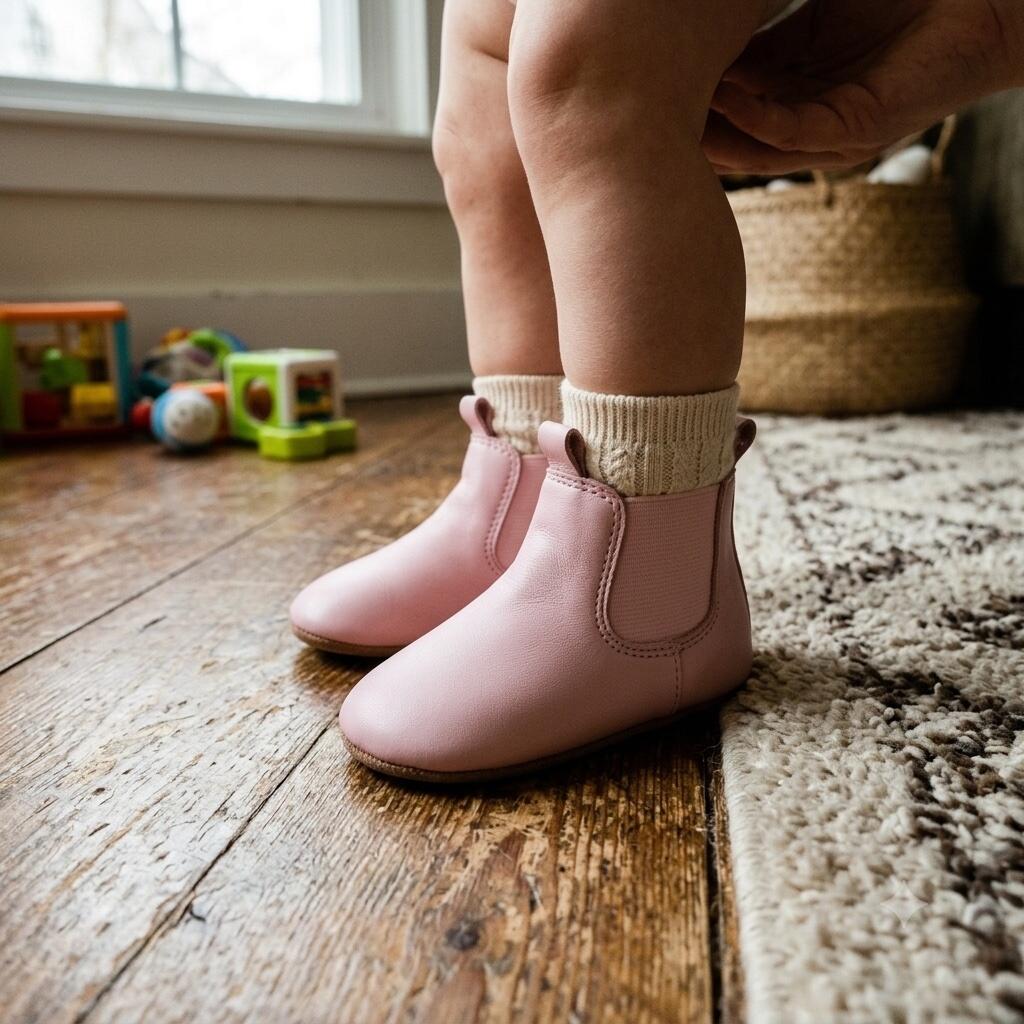
As your baby starts reaching, rolling, and sitting up, their feet are beginning to bear some weight. Soft pre-walker shoes can offer gentle warmth and protection without restricting movement.
Crawler (~7 to 10 months)
Crawling typically begins between 7 and 10 months, though as research published in PMC notes, some babies skip crawling entirely and move straight to cruising. Flexible soft-sole shoes protect little feet during this active stage while still allowing full range of motion.
Cruiser (~8 to 12 months)
Pulling up on furniture and walking along it is a critical balance-building phase. Your baby's feet are working hard, gripping and adjusting with every step. Shoes at this stage should be ultra-flexible and lightweight, letting the foot do its job.
Early Walker (~10 to 20 months)
Independent walking can begin anywhere between 10 and 20 months. This is when your child genuinely needs shoes for outdoor walking. Flexible first walkers with a stable heel cup and wide toe box are ideal. The key is supporting, not restricting, their natural gait.
The 7-Point Newborn Shoe Checklist
When the time comes to buy your baby's first real shoes, here are the seven features that matter most, and the developmental reasons behind each one.
1. Flexible Sole
A true soft-sole shoe should bend until it touches itself. If it can't, it's too stiff for a pre-walker or first walker. A flexible sole allows your baby's foot to move naturally, building the muscles and balance they need. If the sole doesn't pass this simple bend test, it's not a genuine soft-sole shoe.
2. Wide Toe Box
Baby toes are naturally chubby and spread wide for balance. A wide toe box gives those toes room to splay, grip, and coordinate. Narrow, pointed shoes compress the toes and can interfere with balance development, which is the last thing a new walker needs.
3. Breathable Natural Materials
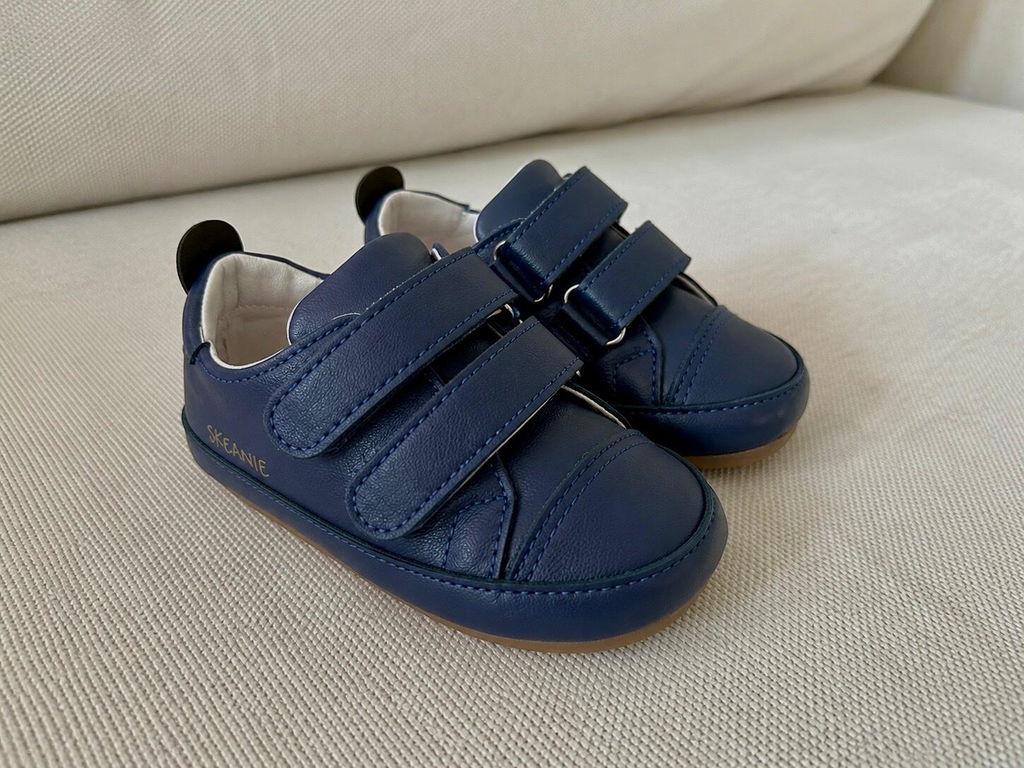
Genuine soft leather is the gold standard for baby shoes, especially in Australia's heat and humidity. It breathes, moulds to the foot, and wicks moisture away. Synthetic materials trap heat and sweat, creating an uncomfortable (and sometimes irritating) environment for delicate skin.
4. Adjustable Fastenings
Velcro straps or buckle fastenings keep shoes secure on wriggly little feet without restricting circulation. A shoe that slips off constantly is frustrating; one that's strapped too tight can impede blood flow. Adjustable closures let you find the sweet spot.
5. Stable Heel Cup
A gentle heel cup provides just enough structure to keep the foot centred in the shoe without locking the ankle. This is particularly important for early walkers who are still finding their balance. The heel cup guides; it doesn't restrict.
6. Lightweight Construction
Heavy shoes interfere with your baby's natural gait and reduce the sensory feedback they get from the ground. A 2024 rapid scoping review on children's footwear guidelines found that excessive cushioning in early walker shoes may negatively impact gait biomechanics. Light, minimal shoes let tiny feet feel and respond to the surface beneath them.
7. Correct Fit with 1 cm Growing Room
The Australian Podiatry Association recommends approximately 1 cm of space between the longest toe and the end of the shoe. This allows room for growth without the shoe being so large it causes tripping or blisters. Shoes bought "to grow into" are just as harmful as shoes that are too small.
How to Measure Your Baby's Feet at Home
Getting the right fit starts with an accurate measurement. Here's how to do it at home:
- Place your baby's foot flat on a piece of paper (standing if they can, or gently pressed flat if they can't yet).
- Trace around the foot with a pen held upright.
- Measure the length from the heel to the longest toe in centimetres.
- Repeat with the other foot. One foot is often slightly larger; always fit to the bigger foot.
If your baby will be wearing socks with their shoes, pop the socks on before measuring. A newborn foot typically measures around 8 to 9.5 cm, corresponding to a US size 0 to 1.
Here's the part that catches many parents off guard: baby feet can grow a full shoe size every 2 to 3 months. That means you should be checking fit at least every 6 to 8 weeks.
When shopping online, be aware that Australian, US, and EU sizing conventions all differ. Always refer to the brand's specific size chart and use your centimetre measurement as the most reliable guide. For gift-givers: ask the parent to trace the baby's foot on paper and photograph it before you purchase.
What Happens When Shoes Don't Fit Properly
Ill-fitting shoes aren't just uncomfortable. They can cause lasting damage. Midland Podiatry Australia warns that poorly fitted footwear is linked to bunions, hammertoes, and flat feet in children, as well as ongoing issues with posture, balance, and joint health in the knees, hips, and back.
A 2023 systematic scoping review confirmed that ill-fitted footwear is a contributing factor to flatfoot development in children. According to research from the University of Southampton, an estimated 70% of adult foot problems begin in childhood, often linked to improper footwear.
The early years are when your child's foot structure is being laid down. By age 12, children's feet reach approximately 90% of their adult size. What happens in those formative years truly matters, and getting the fit right is one of the simplest, most impactful things you can do.
A Note for Gift-Givers: How to Buy Baby Shoes with Confidence
Baby shoes are one of the most popular gifts for christenings, baby showers, and newborn celebrations. But if you've ever stood in a store (or scrolled online) feeling unsure about what size or style to choose, you're not alone.
The most helpful thing you can do is ask the parent to measure and share the baby's current foot length in centimetres. Sizing by age alone is unreliable because developmental stage and actual foot size vary enormously between children.
If you're unsure, opt for a slightly larger size, keeping the 1 cm growing room rule in mind. Look for shoes labelled as podiatry-approved or podiatrist-recommended; it's a reliable quality signal. In Australia, a good pre-walker shoe typically costs between AUD $30 and AUD $45, while first walkers generally range from AUD $40 to AUD $60.
Your Checklist at a Glance
Here's a quick summary you can save or screenshot:
-
Flexible sole that bends to touch itself
-
Wide toe box for chubby toes and natural balance
-
Breathable natural materials like genuine soft leather
-
Adjustable fastenings for a secure, comfortable fit
-
Stable heel cup for gentle support without restriction
-
Lightweight construction that doesn't interfere with natural gait
-
Correct fit with ~1 cm of growing room
Remember: the right shoe for the right stage. Re-check that fit every 6 to 8 weeks.
Getting footwear right in these early years sets the foundation for a lifetime of healthy movement. It doesn't have to be complicated, and it doesn't have to be stressful. At SKEANIE, every shoe we make is designed around these principles, from our pre-walker booties to our first walker range. Each one carries the APMA Seal of Acceptance and is podiatry-approved, because your little one's feet deserve the very best start.
Explore our stage-specific collections and find the perfect fit for your baby's next milestone.
Sources