Your Baby's Feet Are Almost Entirely Cartilage. Here is Why That Changes Everything
Here's something that surprises many new parents: at birth, your baby's feet are made almost entirely of soft cartilage, not bone. The adult foot contains 26 bones and 33 joints, but the process of turning that cartilage into bone (called ossification) isn't complete until around age 18.
You might also notice that your newborn's feet look completely flat. That's because all babies are born with a fat pad in the arch area, which acts as a natural shock absorber. This is perfectly normal. The arch only becomes visible later, as walking strengthens the muscles and connective tissue over time.
What makes the first year especially important? Feet grow at an extraordinary rate — up to half a shoe size per month, according to the Guildford Podiatry Centre — making this the most critical period in foot development.
This guide walks you through each developmental stage from birth to age two, so you can feel confident about the choices you make for your baby's feet.
0–6 Months: The Newborn Stage — Barefoot Is Best
If you hold your newborn upright on a surface, you might see them move their little legs as if walking. This is called the stepping reflex, and it's present from birth before disappearing at around six weeks. It's one of the earliest signs that your baby's body is already wired for movement.
Your baby's feet are also remarkable sensory tools. Each sole has an estimated 200,000 nerve endings. These proprioceptors send the brain critical information about surfaces, posture, and balance from day one. That sensory feedback is the foundation of everything that comes next.
So what's the single most important thing you can do for your baby's feet at this stage? Keep them bare. Barefoot time allows those nerve endings to do their job, and it's endorsed by podiatrists as the gold standard for newborn foot health.
Avoid tight socks, booties, or anything that restricts toe movement or compresses the foot's natural shape. If you do use socks for warmth, choose natural, breathable fabrics with a loose toe box and avoid elasticated ankles that leave marks on the skin.
Tummy time also plays a role here. It supports overall motor development, which feeds directly into foot and leg strength as your baby grows.
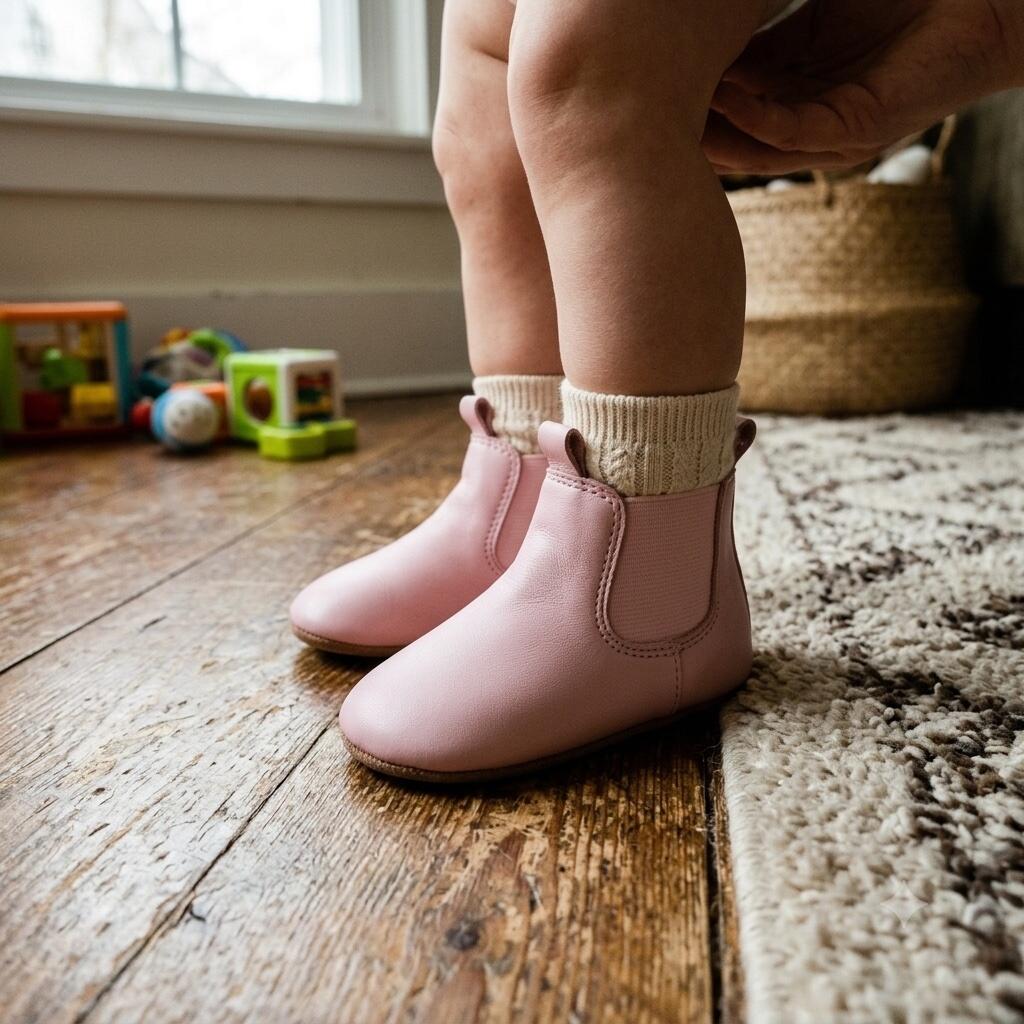
No shoes are needed at this stage. Soft, flexible pre-crawling shoes or pram booties are purely for warmth and aesthetics; they should never restrict movement or provide "support."
6–12 Months: Sitting, Crawling, and Cruising — A Stage With Its Own Footwear Needs
Between 6 and 10 months, important structural developments occur as your baby's foot begins to take shape. This is a busy time for little feet, and a stage that's often overlooked.
At around 8 to 10 months, most babies begin "cruising": pulling themselves up on furniture and shuffling along it sideways. This is a distinct developmental phase that matters more than many parents realise. For the first time, your baby's feet are bearing their full body weight, and the proprioceptive feedback from the floor is essential for building balance and coordination.
Barefoot or soft-soled shoes remain the best choice during crawling and cruising. Rigid soles interfere with sensory feedback and prevent the natural flexion your baby's foot needs. A peer-reviewed study published in PMC found that toddlers wearing barefoot-style shoes developed a higher plantar arch and a smaller foot progression angle compared to those in conventional shoes after seven months of independent walking.
A separate multicenter epidemiological study of 810 children reinforced this, finding that habitual footwear use was associated with reduced foot arch development compared to habitually barefoot children.
By your baby's first birthday, their feet will have reached approximately half their adult size, typically around AU/US size 3 to 4. And if you're worried about flat feet, don't be: around 45% of pre-school children have flat feet, and this is physiologically normal. It reduces naturally with age.
One important note: baby walkers are not recommended by podiatrists or paediatricians. They can impair muscle development and increase the risk of a permanent impaired walking pattern. Let your baby cruise and explore at their own pace.
12–24 Months: First Steps and Early Walking — What Feet Really Need
Children typically begin walking anywhere between 10 and 20 months of age. There's a wide normal range, and every child moves through these milestones at their own pace. If your little one is taking their time, that's completely okay.
When those first steps do arrive, you'll notice something interesting. New walkers initially contact the ground with the central part of their foot. As they gain confidence, they shift to a heel-first contact pattern, which is a key biomechanical milestone in gait development.
The Australian Podiatry Association advises that when a child first starts walking, shoes should only be worn for protection, not for support. Allowing children to go barefoot or wear very soft shoes helps the foot develop typically and strengthens muscles.
When shoes are needed, here's what to look for in a healthy first walking shoe:
- A flexible sole that bends easily at the ball of the foot
- A wide toe box to accommodate chubby baby toes
- Natural, breathable materials like genuine leather
- Lightweight construction
- A secure, adjustable fit
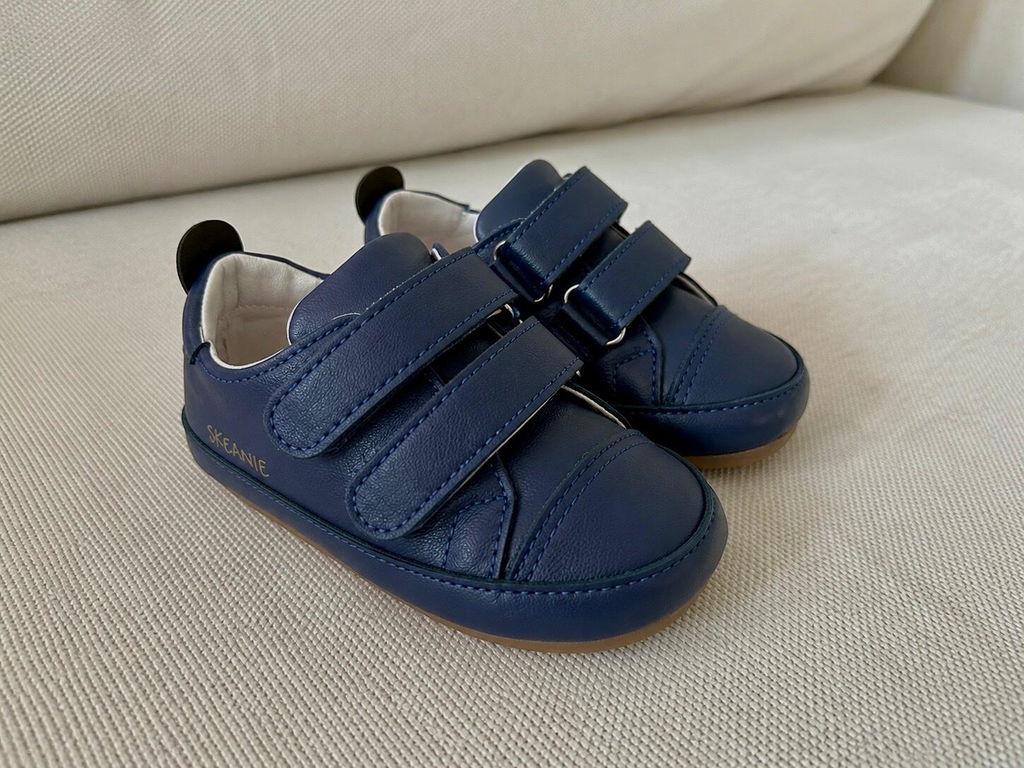
Why leather? As Straits Podiatry notes, natural materials allow the foot to breathe and flex more naturally than synthetics. This is especially relevant in warmer Australian climates. At SKEANIE, our first walking shoes are made from genuine, soft leather and have earned the Seal of Acceptance from the American Podiatric Medical Association (APMA), giving parents confidence that they meet rigorous podiatric standards.
Between ages 1 and 3, toddler feet grow approximately one-third to one-half a shoe size every 2 to 3 months, meaning you may need to replace shoes every 3 to 4 months. Fit matters enormously: according to Adelaide Foot and Ankle, 65% of children wear ill-fitting shoes. A Swiss study even found that 90% of shoes sold to children were significantly smaller than their advertised size.
According to a national poll by the University of Michigan C.S. Mott Children's Hospital, only 6 in 10 parents are very confident their child is wearing the right shoe size, and just 11% prioritise professional fitting, despite it being the most reliable method.
And please, never hand down shoes between children. Worn shoes mould to the previous wearer's foot shape and can impose that shape on a new child's developing feet.
Red Flags: When to See a Podiatrist
Most foot and walking variations in young children are completely normal. But there are some signs worth discussing with a podiatrist:
-
Persistent toe-walking beyond age 2
-
In-toeing or out-toeing that doesn't improve or worsens after age 2
-
Foot pain complaints (10% of parents report their child has complained of foot pain, yet only about half of well-child visits address foot health)
-
Asymmetry between feet in size, shape, or movement
-
Flat feet that show no improvement by age 5 to 6, or are accompanied by pain or clumsiness
-
Frequent tripping or falling, significantly more than peers of the same age
We want to reassure you: the vast majority of concerns turn out to be part of normal development. But if something doesn't feel right, a podiatrist visit is always worthwhile. Early intervention, when needed, makes a real difference.
Practical Tips for Parents and Gift-Givers
Measuring at home: Trace your baby's foot on paper, measure both the length and width, and always check both feet as they can differ. By age 1, most babies are in AU size 3 to 4. By age 2, typically AU size 5 to 7. Always measure; never guess.
Gift-giving guidance: For newborns, choose soft pre-crawling styles. For 6 to 12 months, look for flexible soft-soled shoes. For walkers, a proper first shoe with a flexible sole and wide toe box is ideal.
Socks matter: Choose natural fibres, avoid tight elastics, and make sure socks don't bunch up inside shoes.
Check fit regularly: Every 6 to 8 weeks is a good rhythm. Don't wait until shoes look worn out; your child's feet may have already outgrown them. If you can access a professional fitting, it's well worth it.
Give Your Baby's Feet the Best Start
Your baby's feet are extraordinary. They're fast-growing, neurologically active, and remarkably adaptable. The choices you make in the first two years really do matter for their long-term foot health.
The barefoot-first principle isn't just instinct; it's supported by peer-reviewed research. A 2025 rapid scoping review highlighted that many children's footwear guidelines still lack standardisation, making it even more important for parents to be informed and intentional about their choices.
When shoes are needed, choose stage-appropriate, podiatrist-approved footwear made from natural materials with a wide toe box and flexible sole. And remember: flat feet, in-toeing, and taking a little longer to walk are almost always normal parts of development.
Trust your instincts. Seek professional advice when something feels off. And know that prioritising foot health from day one is one of the most meaningful investments you can make in your child's lifelong wellbeing.
Sources