


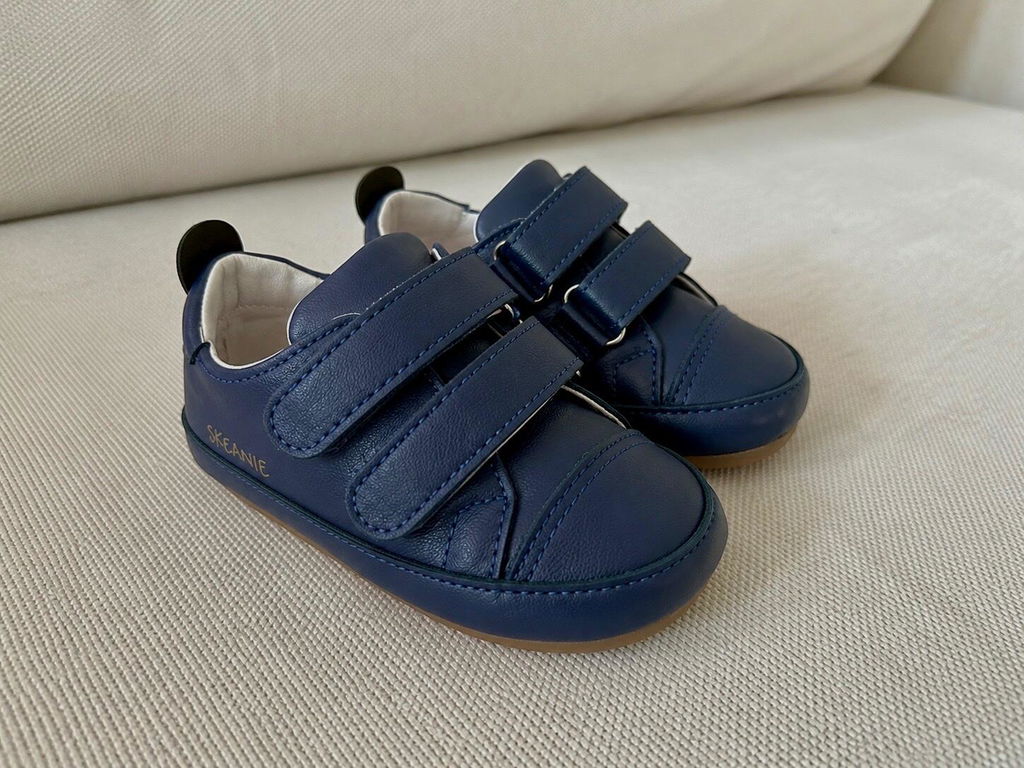
I couldn't be happier with the Tyler Trainers in Navy! The quality is outstanding, and they look even better in person. The soft leather is incredibly gentle on my little one's feet, while still providing enough structure to keep them comfortable whilst crawling, and those exciting first standing attempts.
They're so easy to get on and actually stay on, which has been a huge bonus compared to other baby shoes we've tried. The navy colour is classic and goes with almost every outfit, whether it's for everyday wear or special occasions.
What I love most is knowing they're designed to support healthy foot development with their lightweight, flexible sole. My baby seems completely comfortable wearing them and never tries to pull them off.
If you're looking for a stylish, high-quality first shoe that combines comfort, flexibility, and durability, I highly recommend the Tyler Trainers. They're worth every cent and would make a beautiful gift for any new parent.
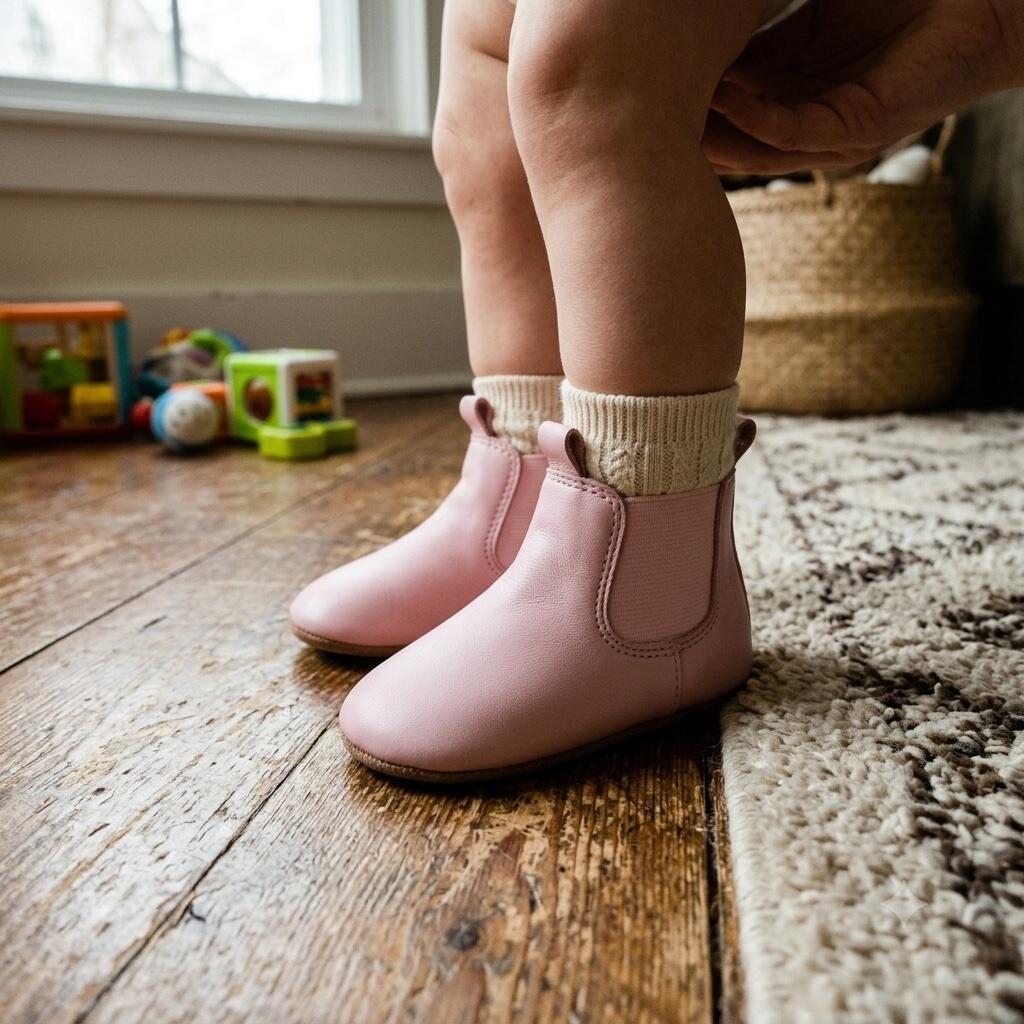
I am absolutely thrilled with these little pink riding boots from Skeanie! We were looking for something soft and flexible for our baby who is just starting to pull up and cruise, and these are absolutely perfect.
First, the quality of the leather is exceptional. It’s incredibly soft and supple, which is exactly what we wanted for a pre-walker. The flexibility in the sole is fantastic; you can tell it's not restrictive at all. They allow my baby's feet to move naturally while providing enough protection.
The design is just adorable, the pink is soft and classic, and the riding boot style looks sophisticated. We’ve received so many compliments!
Crucially for us, they are very easy to put on. The pull tabs are robust, and the elastic side gusset stretches enough to fit over little chubby feet, but they don't slip off once they are on. This is a game-changer for wriggly toddlers!
If you are looking for a beautiful, functional, and foot-healthy first boot for your little one, I cannot recommend these enough. They are worth every penny!
Thank you so much for sharing your wonderful experience! We're delighted to hear that your little one loves the boots and that they meet all your needs. Your kind words truly mean a lot to us. Enjoy those adorable adventures with your tiny explorer!
Beautiful little pack of baby socks - great gift, nicely packaged.
Great little gift pack for newborn, cute packaging too.
We absolutely love these SKEANIE UGG Baby Boots! From the moment we put them on our toddler, we could tell they were something special. The genuine leather is buttery soft and flexible, and the fluffy lining keeps our little one's feet warm and cosy during chilly mornings. They’re super easy to slip on and actually stay on—something every parent knows is a big deal!Highly recommend for any parent looking for high-quality first walker boots. Will definitely be buying another pair in a bigger size when she outgrows these! We’ve had compliments on them everywhere we go!