If you’ve found your way here, you’re probably deep in the tabs-open-at-midnight stage of shoe research - a size chart in one tab, a podiatry blog in another, and three brands you’re trying to tell apart. We know that parent well. We’ve been making shoes for her (and her babies) since 2005.
So rather than tell you SKEANIE is the only good choice, it isn’t, Australia has several genuinely good children’s shoe brands. This guide compares the options the way a podiatrist would: criterion by criterion. By the end you’ll know exactly what to look for, whichever box ends up on your doorstep.
What actually matters in a toddler shoe (and what doesn’t)
Babies’ feet are mostly cartilage, gradually forming bone through the early years. Feet in that window don’t need "support" — they need freedom to move, grip and feel the ground, with just enough protection for the world outside. That’s the lens podiatrists use, and it gives us five criteria that genuinely separate brands:
-
Sole flexibility — can the sole fold in one hand? Is it zero-drop (heel and toe level)?
-
Materials — breathable, natural uppers and linings, gentle on skin that sweats twice as much as ours
-
Podiatry endorsement — real, verifiable approval, not just the word "podiatrist" in the marketing
-
Ease of use — can you get it onto a wriggling foot in one go, and does it stay on?
-
Price and value — cost per month of actual wear, not just the number on the tag
The Australian toddler shoe landscape
Most brands you’ll shortlist fall into one of four camps:
-
Barefoot-first brands — designed around natural foot development: thin flexible soles, wide toe boxes. SKEANIE sits here, alongside parts of the Bobux range.
-
Traditional structured brands — firmer soles and built-up "support," often found in department stores. Well-made, but built on an older philosophy of what growing feet need.
-
Fashion-first brands — labels like Old Soles lead with style; foot-development features vary piece by piece.
-
Sock-shoe hybrids and budget options — Attipas (from around $32) and similar are light and foot-shaped, great as a first step-up from socks, with less protection and durability for outdoor wear.
Criterion 1: Sole flexibility — try the fold test
Take any toddler shoe and try to fold it in half, toe to heel, with one hand. A shoe designed for developing feet folds easily; a stiff shoe fights you and it will fight your toddler’s foot the same way, step after step.
Every SKEANIE sole is zero-drop and ultra-flexible by design, graded by stage: soft suede for pre-walkers, suede with rubber grip for cruisers, and lightweight natural rubber for confident walkers. Premium barefoot competitors pass the fold test too, this is the criterion where the barefoot-first camp separates from everyone else.
Criterion 2: Leather and materials
Little feet work up to three times harder than ours and sweat twice as much, so breathability isn’t a luxury. SKEANIE shoes use genuine soft leather uppers and linings, ethically made with responsibly sourced materials — with removable insoles you can wash (or replace with orthotics if your podiatrist recommends them).
Here the field genuinely varies: premium brands broadly use quality leather; budget and hybrid options lean on synthetics and fabric, which do fine for occasional wear but hold heat and moisture on all-day feet.
Criterion 3: Podiatry endorsement — ask for the certificate
"Podiatrist recommended" is one of the most borrowed phrases in children’s footwear, so here’s a research-driven parent’s tip: ask what sits behind it.
SKEANIE shoes are podiatry designed and approved in Australia, and our Toddler and Pre-walker leather shoes carry the Seal of Acceptance from the American Podiatric Medical Association (APMA) — an independent, internationally recognised assessment. Very few Australian children’s brands hold it. If you’re comparing shortlisted brands, this is a genuinely fast filter: verifiable endorsement, or vibes.
Criterion 4: Ease of use — the 7am test
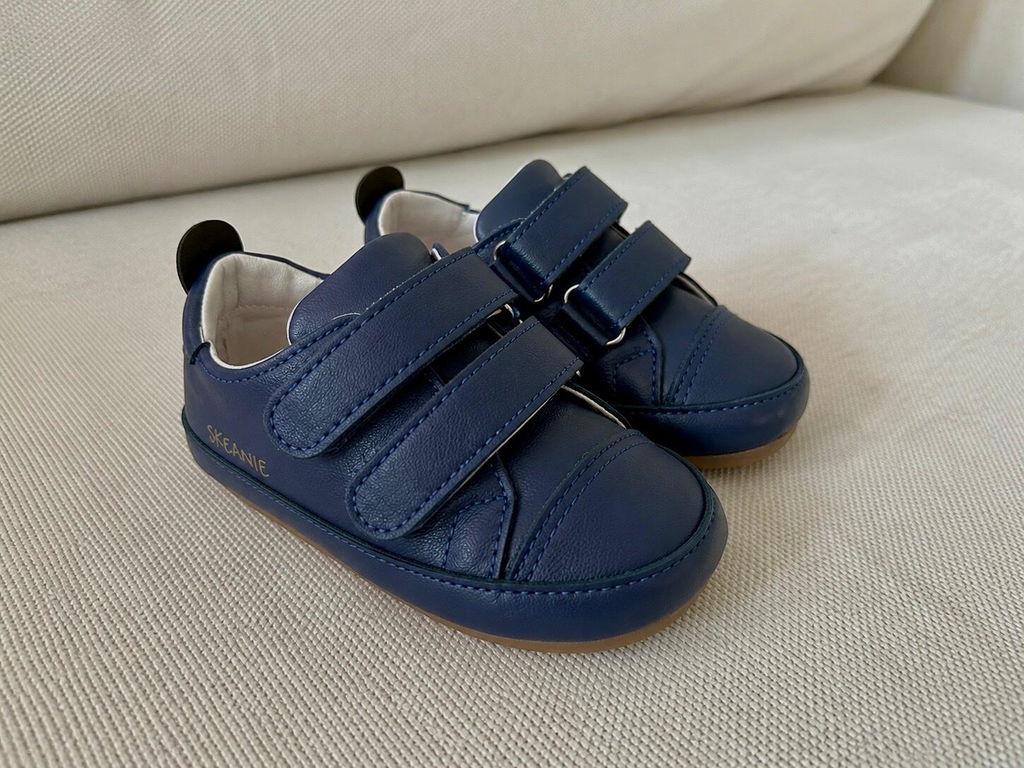
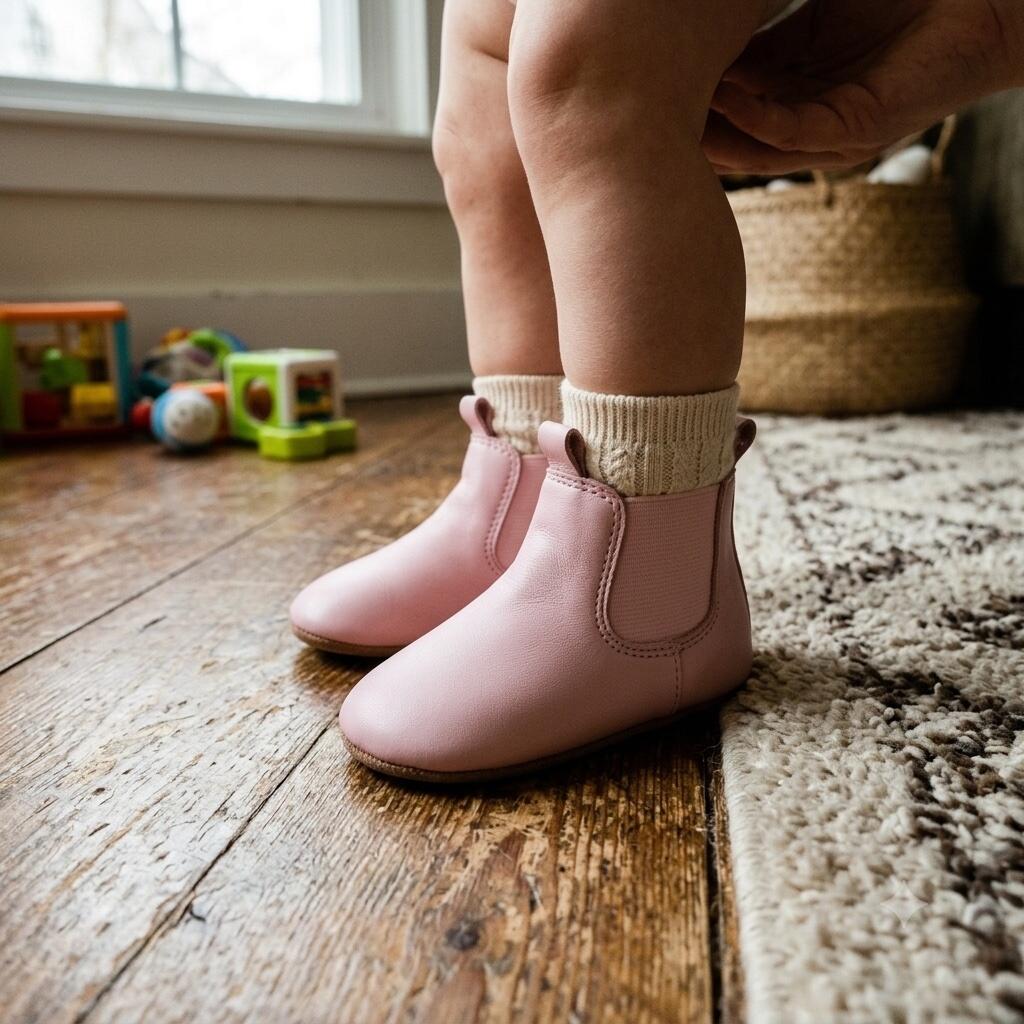
A beautiful shoe that takes two adults to get on isn’t a beautiful shoe by week three. SKEANIE first walkers close with wide-opening, adjustable hook-and-loop straps, on in seconds, adjustable across chubby and slim feet, and toddler-proof once fastened. Our boots use elasticised side entry for the same reason.
Laces and buckles look adorable and photograph beautifully; if a brand you love uses them, just know what your mornings are signing up for.
Criterion 5: Price — and what a fair one looks like
Australian toddler shoes run from roughly $30 for sock-shoe hybrids to $90+ for premium European-style leather. SKEANIE sits deliberately in the middle: most first walkers are $55–$60, with free Australia-wide shipping from $50.
Two things to weigh beyond the sticker: cost per wear (a quality leather pair worn daily for a couple months costs well under a dollar a day) and returns policy fine print — especially on sale items, where most brands, us included, follow Fair Trading rules.
Where SKEANIE might not be your answer
Honesty makes comparisons useful, so: if you need waterproof gumboots, football boots, school shoes or sports shoes, we’re not your brand - our range runs newborn to toddler sizes, built for the foot-development years. And if you prefer bold fashion statements over quiet classics, a fashion-first label may spark more joy on the change table. We’d rather you buy the right shoe than our shoe.
What nearly 500 Australian families say
Comparison tables are useful; verified parents are better. SKEANIE is currently rated 4.97 out of 5 from verified reviews — with 98% five-star. The most repeated themes: how soft the leather is, how easily the shoes go on, and how quickly wobblers become walkers in them. (We read every review. Sometimes twice.)
Frequently asked questions
Are barefoot-style shoes actually better for toddlers?
Podiatrists and paediatricians recommend soft, flexible-soled shoes for babies and toddlers because feet develop best when they can move naturally and feel the ground. That’s the principle every SKEANIE is built on.
What’s the difference between pre-walkers and first walkers?
Pre-walkers protect crawlers and cruisers (soft suede soles); first walkers add light grip and durability for independent steps. Our stage-based collections take the guesswork out.
How do I know the size is right?
Measure foot length in millimetres at day’s end and match it to our sizing chart — wriggle room is already factored in. Re-check every 6–8 weeks; growing feet can jump half a size in two months.
The bottom line
Australia has good toddler shoe brands and one question that sorts them quickly: is the shoe built around how feet actually develop, and can the brand prove it? SKEANIE’s answer is 21 years of barefoot designed, podiatry-approved shoemaking, a 4.97-star record with Australian families, and a price that doesn’t make quality a luxury.
Ready to compare in person? Explore our shoes — free shipping Australia-wide over $50, and a sizing chart that makes the first fitting easy.
SKEANE shoes are developed in collaboration with podiatrists across Australia, the UK and the USA, including leading children's foot development specialist Tracy Byrne