Your Baby Was Born With Zero Bones in Their Feet
Here's something that surprises most new parents: your newborn entered the world with no bones in their feet. None at all. Those tiny, perfectly soft feet are made entirely of spongy cartilage that will slowly harden (or "ossify") into the 26 bones and 33 joints of an adult foot, and that process isn't complete until around age 18.
At six months, your baby's feet are still almost entirely cartilage. The last bone doesn't even begin forming until around age three. Yet by their first birthday, those little feet will have already reached nearly half their adult size, making the first 12 months a critically important window for healthy foot development.
The arch doesn't fully develop until around age six, so every shoe choice you make during early childhood has the potential to shape how your child's feet grow for years to come. Once you understand how baby foot development works, making great footwear choices becomes surprisingly straightforward.
Why 2026 Is the Tipping Point for Barefoot-Designed Footwear
Barefoot shoes are no longer a niche wellness category. The global barefoot shoes market was valued at roughly $680 million AUD in 2025 and is projected to grow at nearly 9% annually, reaching over $1.2 billion AUD by 2032. In 2026, major conventional brands are launching their own barefoot lines, signalling that the category has well and truly hit its tipping point.
The cultural validation is unmistakable. Luxury fashion houses like Chanel and Balenciaga have embraced the "shoe-without-shoe" aesthetic on the runway, and the broader 2026 trend toward slimmer silhouettes, softer materials, and lower-profile designs naturally overlaps with barefoot design principles.
For babies and toddlers, though, this isn't a trend. It's what podiatrists have been recommending all along. Health-conscious millennial and Gen Z parents are driving demand for science-backed, podiatrist-approved baby shoes, framing barefoot-designed footwear not as fashionable but as a developmental necessity. The rest of the world is simply catching up to what the evidence has said for years.
What the Science Actually Says About Barefoot Design and Children's Feet
The research supporting barefoot-designed shoes for children is substantial and growing. A 2025 rapid scoping review found that 13 of 14 reviewed studies and guidelines recommended flexible children's footwear, concluding that flexible soles approximate barefoot plantar pressure distribution more effectively than rigid alternatives.
A 2024 study published in the Journal of Sports Sciences demonstrated that minimalist school shoes improve intrinsic foot muscle size, strength, and arch integrity in children aged 9 to 12. A 2021 study published in Scientific Reports found that daily activity in minimal footwear increases foot strength by an average of 57.4% after just six months.
The evidence goes further. A multicenter epidemiological study of 810 children found that habitual footwear use significantly reduces foot arch height and hallux angles across all age groups. In contrast, habitually barefoot children develop stronger arches, better foot pliability, and fewer deformities compared to their shoe-wearing peers.
Australian podiatrists echo these findings. The Australian Podiatry Association states that allowing children to go barefoot or wear very soft shoes helps the foot develop naturally and assists in strengthening muscles. Podiatrist Monique Milne of Well Heeled Podiatry specifically recommends barefoot-mimicking shoes for toddlers, noting they allow feet and toes to spread, helping with balance, coordination, and muscle development.
The science is clear: flexible, minimalist shoes for toddlers and babies aren't just "nice to have." They actively support the way young feet are designed to grow.
The Barefoot-From-Birth Movement: It Starts Before They Can Walk
Most barefoot shoe content focuses on walkers and older children. But the case for barefoot design starts much earlier, at the newborn and pre-crawling stage.
During the pre-crawling and crawling stages, your baby's feet are at their most vulnerable. The cartilage is soft and pliable, which means any rigid or overly tight shoe can impede natural development. This is precisely when flexible, barefoot-designed shoes matter most.
There's a sensory dimension that often gets overlooked. Barefoot-designed shoes allow babies to feel the ground beneath them, supporting proprioceptive and neurological development alongside physical foot strength. Those early sensory experiences through the feet help your baby build balance, spatial awareness, and coordination from the very beginning.
Given that children can outgrow shoes every two to four months during early development, stage-specific design is essential. A one-size-fits-all approach simply doesn't work. The developmental journey is a continuous barefoot-design story: pre-crawling shoes that protect without restricting, crawling shoes that allow grip and movement, cruising shoes that support confidence, and early walking shoes that let little feet do the work.
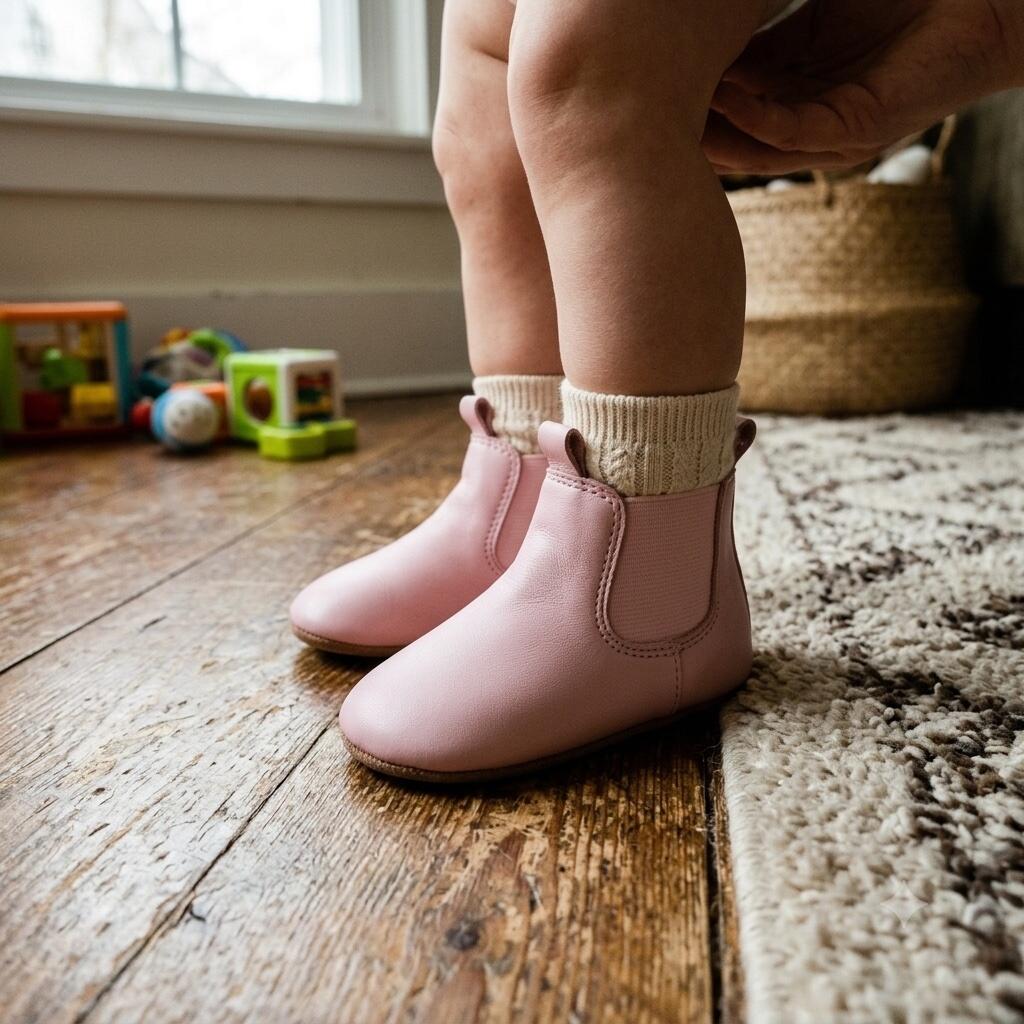
From day one, a wide toe box is critical. Babies naturally have chubby, splayed toes and need room to spread. Cramping those toes into a narrow shoe during the cartilage stage can have lasting effects on foot shape and function.
Why Natural Leather Makes a Difference for Developing Feet
Material matters when it comes to barefoot-designed shoes. Leather accounts for approximately 39.3% of material usage in the barefoot shoe market, reflecting strong consumer preference for natural materials, and for good reason.
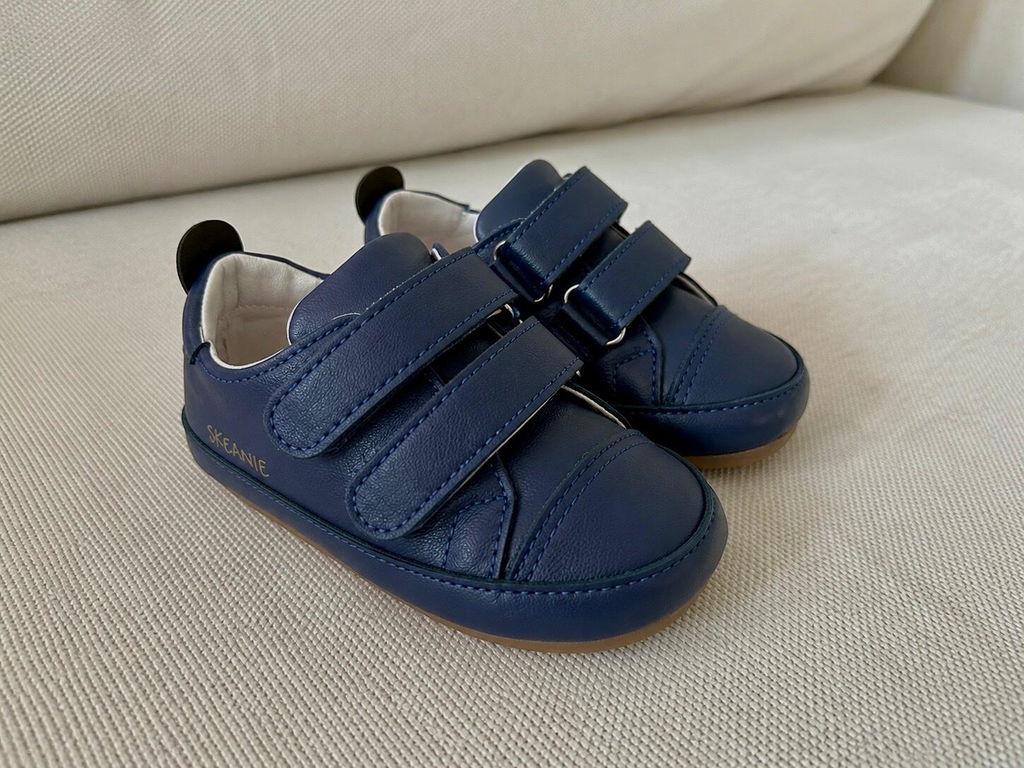
Genuine soft leather is superior to synthetics for baby shoes in several key ways. It breathes naturally, preventing overheating and moisture buildup. It's inherently flexible, moving with the foot rather than against it. And it moulds gently to the unique shape of each baby's foot over time, reinforcing the barefoot-mimicking effect.
For eco-conscious parents, natural leather paired with water-based dyes and finishes aligns beautifully with sustainability values, supporting both your child's health and your environmental principles.
Natural leather barefoot shoes also make genuinely meaningful gifts. Whether it's a baby shower, a christening, or a newborn milestone, gifting footwear that's both beautiful and developmentally beneficial feels far more thoughtful than a novelty pair that looks cute but restricts little feet.
What to Look for in a Barefoot-Designed Baby Shoe in 2026
With barefoot shoes going mainstream, there are more options than ever. Here's what to look for when choosing barefoot-designed shoes for your baby or toddler:
-
Flexible sole that bends easily in your hands (if you can't fold it, it's too rigid)
-
Wide toe box that allows toes to spread naturally
-
Lightweight construction so little feet aren't weighed down
-
Breathable natural materials like genuine soft leather
-
Secure but non-restrictive fit that keeps the shoe on without squeezing
Stage-specific design matters too. Pre-crawling, crawling, and early walking shoes each serve different functions, and choosing the right shoe for your child's current developmental stage makes a real difference. Look for brands that design their collections around these milestones rather than offering a single shoe for all stages.
One credible third-party signal to look for is the Seal of Acceptance from the American Podiatric Medical Association (APMA), an independent verification that a shoe has been reviewed and recognised as promoting good foot health. SKEANIE is proud to carry this seal across our range.
Check the fit every two to four months given how quickly little feet grow. And take heart: in 2026, barefoot-designed shoes can be both stylish and developmentally sound. You no longer have to choose between the two.
The Bottom Line for Australian Parents in 2026
Barefoot-designed shoes are going mainstream because the science has always supported them. 2026 is simply when the rest of the world caught up.
The most important window for foot development is earlier than most parents realise. It starts at the newborn and pre-crawling stages, not just at those celebrated first steps. Treating footwear as a developmental tool rather than an accessory is one of the simplest, most evidence-backed decisions you can make for your child's long-term foot health.
At SKEANIE, we've been built on these principles since 2005, long before barefoot shoes were mainstream. With podiatrist-approved designs, stage-specific collections aligned to developmental milestones, genuine natural leather, and over 200 stockists globally, we've always believed that the best shoe for a growing foot is one that lets it grow naturally. We're glad the world is finally catching on.