Your Baby's Feet Are Not Miniature Adult Feet
At birth, each of your baby's tiny feet contains 22 separate bones, and nearly all of them are made of soft, pliable cartilage. This isn't just a fun anatomy fact. It's the single most important thing to understand about infant footwear.
Those 22 bones will gradually harden and develop into the 26-bone adult structure we all have, but that process isn't complete until around age 18 to 20. The last bone doesn't even begin forming until a child is about three years old. Between 12 and 48 months, foot development is at its most rapid and most vulnerable, making this window critically important for every decision you make about what goes on your child's feet.
Because cartilage is so pliable, it can be moulded by external pressure. That means an ill-fitting shoe can literally reshape your child's foot during these formative years. Here's the tension: the global baby shoe market is valued at approximately $65 billion AUD in 2025 and is growing fast. But that growth is overwhelmingly driven by fashion, not foot health.
How the Baby Shoe Industry Got It Backwards
Many children's shoes, especially sneakers and sport styles, are simply adult designs scaled down into smaller sizes. Research published in systematic reviews has confirmed this: children's sport shoes are often reduced to smaller sizes from adult designs without any consideration for the specific anatomy of a child's foot. A 2024 systematic review explicitly recommended that children should never wear miniature versions of adult footwear.
Yet the "mini-me" fashion trend is accelerating in the opposite direction. Parents are buying baby shoes to match family outfits or replicate adult styles, driven by social media aesthetics and gifting culture. For pre-walkers who don't even need shoes yet, the purchase is almost entirely about how the shoe looks, not how it functions.
The data tells a sobering story. A nationally representative 2024 poll from C.S. Mott Children's Hospital (surveying 2,057 parents) found that 38% of parents cited their child's preferred brand or style as a factor in shoe selection. Only 11% said having shoes professionally fitted was important. Meanwhile, 65% of children are currently wearing shoes that are too small, and between 63% and 72% of children across multiple studies wear shoes that don't properly accommodate their foot's width or length.
The market's dominant material segment is synthetic, projected to account for 41.3% of baby shoe revenue in 2025. This is despite podiatrists consistently recommending genuine leather for its breathability, flexibility, and ability to mould to a child's foot. The industry, it seems, is designing for the parent's eye, not the baby's foot.
The Hidden Harm in "Harmless" Design Features
Thick soles are one of the most common culprits. They block 80 to 90% of a child's normal flex angle, creating flat, pancake-like steps that impair natural gait mechanics. They also deprive developing feet of proprioceptive ground feedback, the sensory information that helps your child learn balance and spatial awareness.
Narrow or pointed toe boxes force toes together, compressing pliable cartilage into shapes it was never meant to hold. This can lead to hammertoes, bunions, and hallux valgus that might never have developed in a foot allowed to spread naturally.
Rigid uppers reduce torsional foot motion by over half. This twisting motion is vital for healthy gait development, and restricting it during the critical 12 to 48 month window can have lasting consequences.
Excessive cushioning might feel like a kindness, but research shows it negatively impacts gait biomechanics in developing feet. More padding is genuinely not better for little walkers. Raised heels on dress shoes shift weight distribution forward, placing stress on developing knees, hips, and the spine. And synthetic materials reduce breathability while failing to flex or mould to the foot's natural shape the way genuine leather does.
Every one of these features is common in fashion-first baby shoes. And every one of them works against your child's foot development.
What the Research Actually Says About Barefoot Development
The Ontario Podiatric Medical Association is clear on this point: shoes "can obstruct the normal development of the foot and its natural motion." They recommend barefoot walking to help children gain strength, stability, and appropriate musculature development. This isn't fringe thinking. It's mainstream podiatric guidance.
The evidence is substantial. Children who go barefoot have lower rates of flat feet and deformity, and greater foot flexibility, than children who regularly wear shoes. Barefoot practice has been shown to strengthen foot muscles up to 57% more than early shoe use. A study published in Frontiers in Pediatrics found that children who spend more time barefoot develop better motor skills, particularly in balance and jumping.
The urban versus rural data is especially striking. Research found that 51.2% of urban children (who wear shoes more frequently) had flatfoot, compared with just 35% of rural children. Approximately 30% of the global adult population lives with foot pathology or pain, and some of these conditions are linked to neglected foot care during childhood.
It's also worth noting that a 2025 scoping review found children's footwear guidelines lack global standardisation. Key inconsistencies exist around fit, flexibility, and toe allowance, and most recommendations are still based on expert opinion rather than robust empirical data. This means parents are receiving inconsistent advice depending on where they look. It's a complex landscape, and we believe transparency about that complexity is more helpful than oversimplifying it.
What to Actually Look for in a Baby Shoe
When your child does need shoes (for outdoor walking, not before), here's what genuinely matters:
-
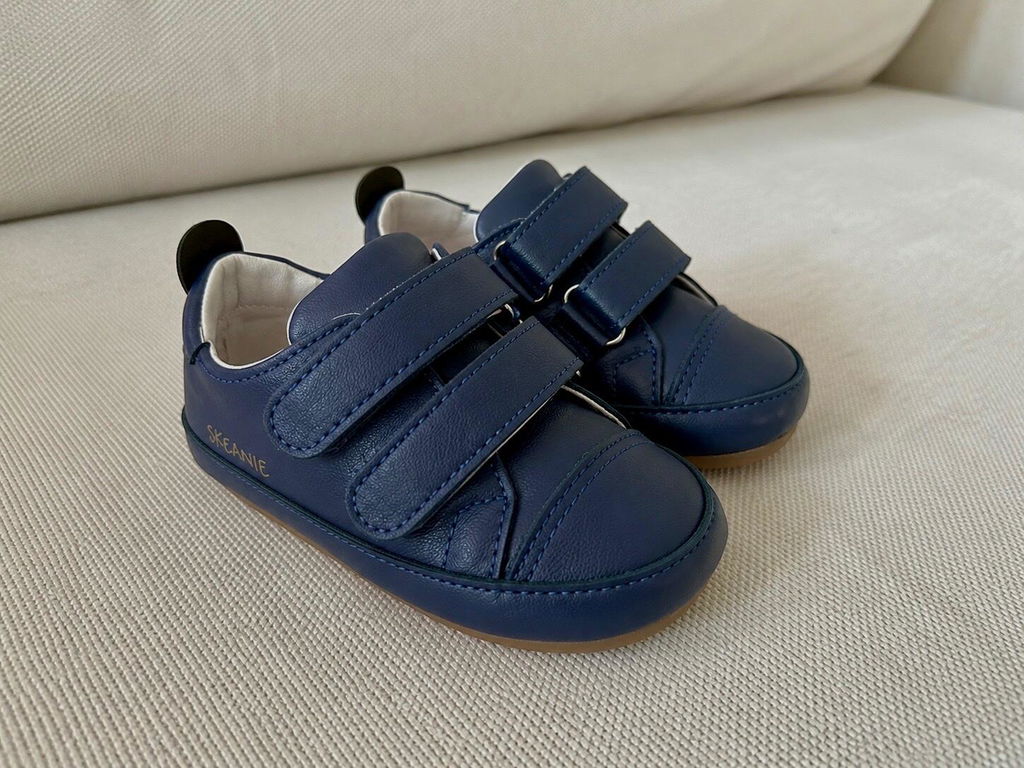
Wide toe box: Allows natural toe splay. Chubby baby toes need room to spread and grip, not be squeezed together.
-
Thin, flexible sole: Lets the foot flex naturally and receive sensory ground feedback essential for balance and brain development.
-
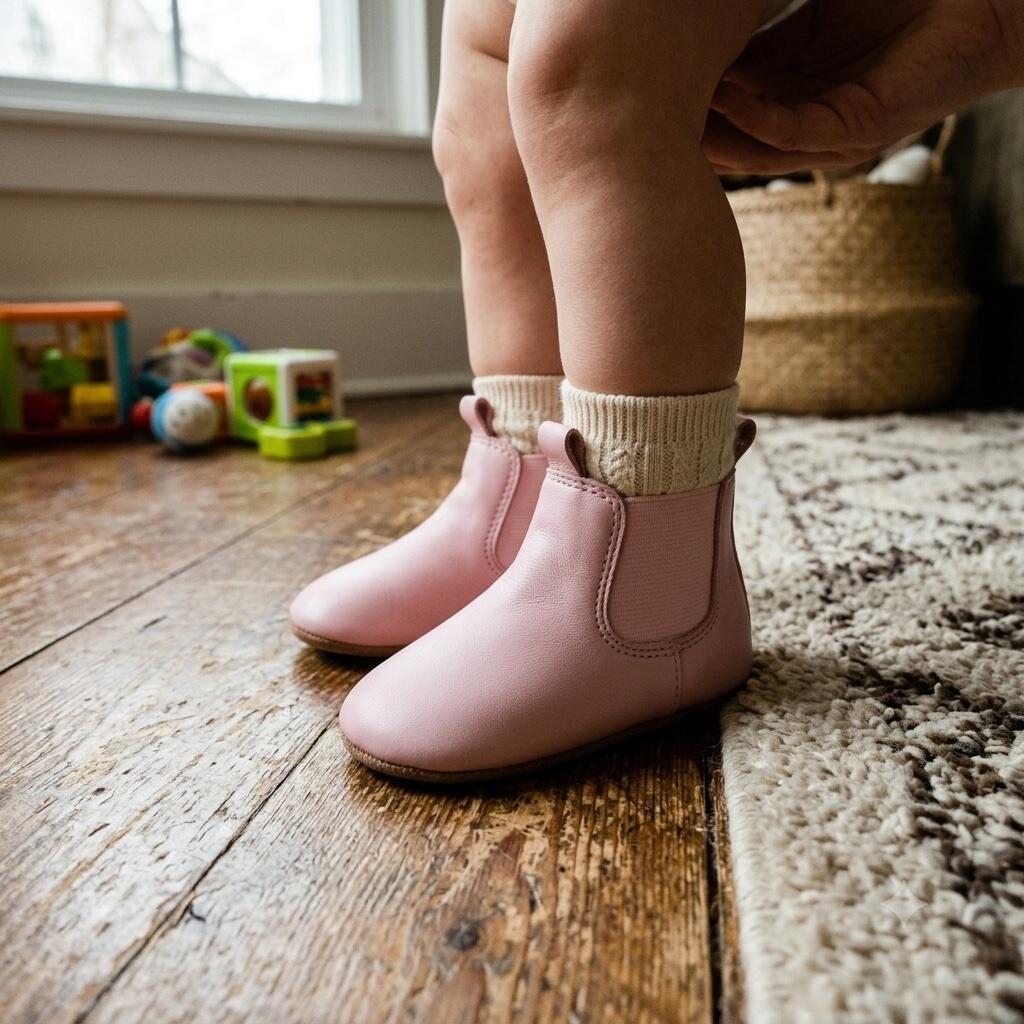
Soft, natural materials: Genuine leather breathes, flexes, and moulds to the foot's shape without restricting it. Synthetics simply can't replicate this.
-
Stage-appropriate design: A pre-crawler has completely different needs than a cruiser or early walker. Shoes should reflect developmental milestones, not just age or size on a label.
-
Regular measuring: The Royal College of Podiatry recommends measuring feet every 8 weeks for children under 4, and every 3 months from age 4 onward. During toddlerhood, feet can grow half a size every 2 to 4 months.
-
Podiatry endorsement: Look for recognised, third-party credentials such as the American Podiatric Medical Association (APMA) Seal of Acceptance. This is a verifiable signal that a shoe has been reviewed and accepted as promoting foot health.
Avoid: pointed toes, rigid uppers, thick cushioned soles, raised heels, and any shoe that is simply a miniaturised adult design. If it looks like a shrunken version of something you'd wear, it almost certainly isn't designed for your baby's feet.
A Note for Gift-Givers: Cute Isn't Always Kind
Grandparents, friends, and family are often the ones buying fashion-first baby shoes. It makes sense; tiny sneakers and little dress shoes look absolutely adorable on a shelf or in a photo. But well-meaning gifts of miniature fashion footwear are among the most common sources of developmentally inappropriate shoes in a child's wardrobe. The most thoughtful gift is one that protects a baby's long-term health, not just one that photographs well. If you're buying shoes for someone else's little one, look for podiatry-approved options designed for the baby's current developmental stage. Choosing developmental footwear doesn't mean sacrificing style. It just means knowing what to look for.
The Bottom Line: Cute and Healthy Are Not Mutually Exclusive
The baby shoe industry is largely designed around parental aesthetics, not infant foot anatomy. That's the reality, and the stakes are real: early footwear choices during the 12 to 48 month window have measurable, long-term consequences for your child's feet, gait, and overall development.
The good news? You don't need to choose between a shoe that looks lovely and one that supports healthy development. You just need to know what to look for. Armed with this knowledge, parents and gift-givers can make choices that serve the child wearing the shoes, not just the adult buying them.
If you're ready to make that shift, explore podiatrist-approved, stage-specific options designed from the ground up for developing feet. Your baby's 22 little bones will thank you.