Why Winter Baby Footwear Is More Complex Than You Think
Here's something that surprises many parents: your baby's foot is made up almost entirely of cartilage at birth, not bone. Those tiny feet won't fully harden and develop their adult bone structure until around age 13. That means every shoe choice you make in these early years genuinely matters.
Winter throws parents a real curveball. You need to keep those little feet warm, but you also need to protect the natural development happening inside them. It's a tension that most footwear guides gloss over entirely.
If you've felt confused about what to put on your baby's feet this winter, you're not alone. A 2025 scoping review published in PMC found that clinical guidelines for children's footwear vary widely and lack standardisation, with most recommendations based on expert opinion rather than solid data. The confusion is real, and it's not your fault.
It's also worth noting that Australian winters, particularly in our southern states, bring mild, damp conditions quite different from the snowy Northern Hemisphere winters that most guides are written for. What works in Canada doesn't necessarily work in Melbourne.
This guide covers every stage from newborn to early walker, indoors and outdoors, so you can make confident choices all winter long.
Stage-by-Stage Winter Footwear: What Your Baby Actually Needs
Your baby's shoe needs are driven by their developmental stage, not just their age. A pre-crawler, a crawler, a cruiser, and an early walker all have very different requirements. Most winter shoe guides focus only on walking toddlers, but every stage deserves attention.
Newborns and Pre-Crawlers: Pram Babies in the Cold
Babies who aren't yet mobile are especially vulnerable to cold feet. When your little one is sitting still in a pram or carrier, reduced activity means reduced circulation. This is a genuine physiological concern, not just a matter of comfort.
For pram babies, your primary warmth solution should be a quality footmuff or insulated pram cover. Soft-soled booties are a wonderful secondary layer, adding warmth without any developmental risk. At this stage, shoes aren't developmentally necessary. The goal is simply warmth and protection.
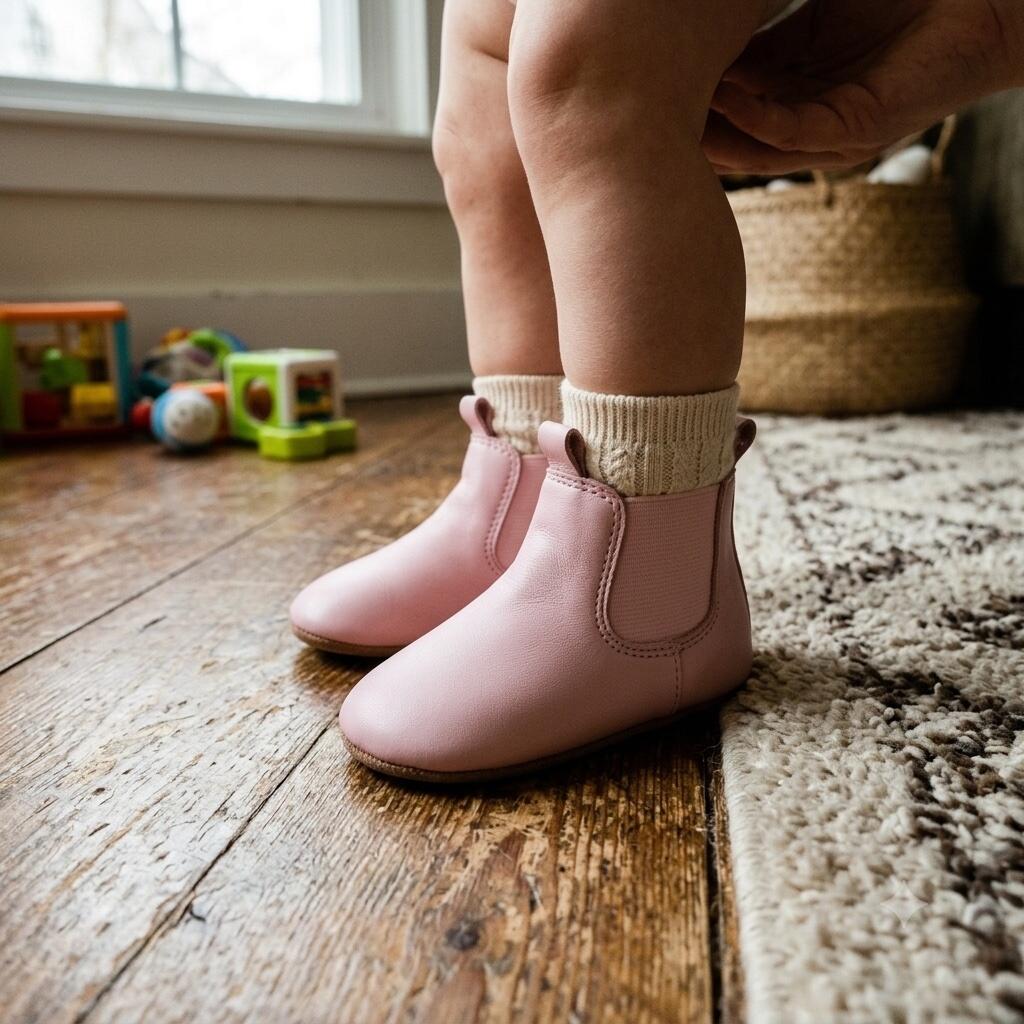
Look for booties made from soft, flexible natural leather or wool. These materials insulate beautifully while allowing tiny toes to move freely, even while stationary. Avoid anything stiff or structured; there's simply no need for it yet.
One important warning: be careful with tight socks. Socks that have shrunk in the wash or are too snug can cause sock-line hyperpigmentation and actually impede normal foot formation. If the elastic leaves a mark on your baby's skin, it's too tight. Choose loose-fitting socks or booties that stay on without constricting.
Crawlers and Cruisers: Exploring Indoors and Out
Once your baby starts crawling, everything changes. They're beginning to use their feet to push off surfaces and feel the ground beneath them. Sole flexibility and grip become important now.
Here's a distinction most guides miss: indoor and outdoor footwear needs are genuinely different. Indoors during winter, soft-soled, barefoot-friendly shoes or booties are ideal. Paediatric physical therapists recommend keeping soles thin and flexible on indoor surfaces so your baby can feel the floor and build strength naturally. Hard soles aren't recommended inside.
Outdoors is a different story. A slightly thicker sole provides traction and protection on cold, wet surfaces, but the shoe must still flex easily at the ball of the foot. Think of it as a gentle step up in protection, not a complete change in philosophy.
Keep in mind that at this stage, feet can grow up to half a shoe size every two months. When you add thick winter socks into the equation, sizing checks every six to eight weeks become essential. A shoe that fit perfectly in April may be far too tight by June.
Early Walkers: Supporting First Steps in the Cold
Children typically begin walking between 10 and 20 months of age. Every child's timeline is different, and shoes should match their actual developmental stage rather than their birthday.
Early walkers need maximum ground feedback to develop coordination and balance. A zero-drop sole, where the heel and toe sit at the same level, promotes natural posture and helps little ones find their footing. Raised heels and rigid soles interfere with natural gait patterns during this critical developmental window, so they're best avoided.
A wide toe box is especially important now, and not just for comfort. When toes can splay naturally, circulation improves. Better circulation means warmer feet. It's a biomechanical connection that most winter guides skip entirely, but it's genuinely significant.
For outdoor winter walks on wet paths and uneven ground, a slightly more protective sole is appropriate. The key is finding that balance: enough protection from the elements without sacrificing the flexibility your child's developing feet need.
The Warmth-Development Connection: Why Barefoot-Style Shoes Actually Work in Winter
There's a persistent myth that developmental, barefoot-style shoes can't keep feet warm in winter. The biomechanics actually tell the opposite story.
Flexible soles allow children to activate more muscles in their feet as they walk. That muscle activation generates internal body heat. So barefoot-style shoes aren't just a developmental choice; they're a functional winter choice too.
A wide toe box plays a role here as well. When toes can spread and wiggle freely, blood circulation to the extremities improves. Circulation is your body's primary mechanism for keeping feet warm. Cramped toes in a narrow shoe actually make feet colder.
Material matters enormously. Genuine leather is a natural insulator that retains body heat while remaining breathable. It prevents the sweat and moisture buildup that makes feet colder over time. This is particularly important because children's feet sweat approximately two to three times more than adult feet. Synthetic materials trap that moisture, reducing warmth and creating discomfort. Natural leather and wool regulate temperature far more effectively.
And here's something few winter guides mention: there's a real risk of overheating. Babies cannot self-regulate their temperature effectively. Over-bundling feet in thick, rigid boots can cause overheating, which paediatricians flag as a genuine safety concern. Breathable, natural materials help prevent this while still providing warmth.
The takeaway? Warmth and development aren't competing priorities. The same features that support healthy foot growth, flexible soles, wide toe boxes, and natural materials, are precisely what keep little feet warm.
The Sizing Trap: Why Winter Shoes Are So Often Wrong
Here's a statistic that should give every parent pause: two out of three children are wearing the wrong shoe size. In winter, this problem gets even worse.
The issue is straightforward. Parents buy shoes that fit bare feet, then add thick winter socks. Suddenly, those perfectly sized shoes are too tight. Restricted circulation follows, and ironically, feet end up colder — the exact opposite of what you intended.
Always size winter shoes with the socks your child will actually wear. Look for at least a thumb's width of growing room at the toe. This gives enough space for warmth and growth without excess room that could cause problems.
Between ages one and three, children's feet grow approximately 1.5mm per month and they'll outgrow shoes two to three times per year. In the Southern Hemisphere, winter shoes bought in April may not fit by July. It's a short window, so buying at the right time matters.
Resist the temptation to buy shoes too large as a workaround. Excess room causes the foot to slide inside the shoe, reducing stability and increasing fall risk for new walkers. That's a real safety concern, not just a fit issue.
Check fit every six to eight weeks. Look for red marks on the skin, toe curling, or a sudden reluctance to walk; these are all signs that shoes no longer fit properly. Research shows that 60% of children show signs of compromised foot health by age six, with ill-fitting shoes cited as the primary cause. Regular checks are one of the simplest things you can do to protect your child's feet.
What to Look for in a Winter Baby Shoe: A Parent's Checklist
When comparing options, here's what to look for:
-
Flexible sole that bends easily at the ball of the foot. Test it by bending the shoe in your hands; it should fold without resistance.
-
Wide toe box with enough room for toes to spread and wiggle freely.
-
Zero-drop or near-zero-drop sole with no raised heel that could alter natural posture.
-
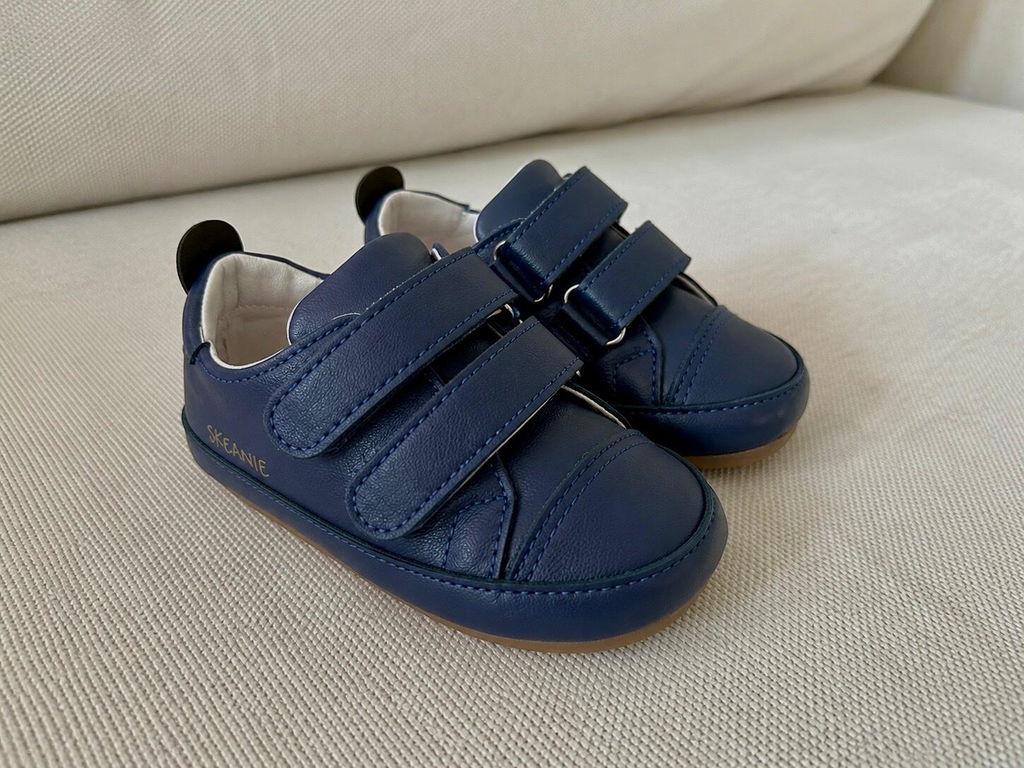
Natural, breathable upper material. Genuine leather or wool is preferred over synthetic fabrics for insulation and moisture management.
-
Secure fastening (velcro or lace) that keeps the shoe on without constricting. This is especially important for pre-walkers in prams.
-
Lightweight construction. Heavy shoes fatigue little legs and reduce the sensory feedback children need to develop balance and coordination.
-
Podiatry endorsement. Look for professional approval, such as the American Podiatric Medical Association (APMA) Seal of Acceptance, as a credibility signal when comparing brands.
-
Avoid overly rigid ankle support. Babies' ankles develop strength naturally through movement, not through external restriction.
If a shoe ticks all these boxes, you can feel confident it's working for your child's feet, not against them.
Keeping Little Feet Warm This Winter, Without Compromise
Warmth and healthy foot development are not competing priorities. The right shoe delivers both. Natural materials, flexible soles, a wide toe box, correct sizing with winter socks, and stage-appropriate choices: these are the principles that matter.
The stakes are real. The first three years are the most critical window for foot formation, and the last bone in your child's foot doesn't even begin to form until around age three. What you put on those tiny feet right now shapes their foundation for life.
Trust your instincts. Seek out podiatry-approved footwear rather than fashion-first options. Since 2005, with over 200 stockists worldwide, we've been designing shoes that honour the way little feet are meant to grow. Every step your child takes matters, and choosing thoughtfully is one of the most caring things you can do as a parent.